MYLION can evaluate a custom lithium battery pack for mobile thermal printers around the device’s power requirements, available space and charging arrangement. The solution can include cell configuration, BMS protection, connector and wiring, housing and charger matching, with the proposed design confirmed through project review and sample evaluation.
For receipt, ticket and label printer OEMs, the starting point is a clear description of the product: how it prints, how long it needs to work and how the battery will be installed and charged. Sharing those requirements helps turn an initial battery inquiry into a focused design discussion.
What can MYLION customize for a mobile thermal printer?
MYLION Soluciones personalizadas para paquetes de baterías de litio cover the battery assembly and its device interfaces. OEM teams can discuss the following items as part of a proposal:
| Customization area |
What to review with MYLION |
| Cell selection and configuration |
18650 or 21700 options, voltage and capacity matched to the device requirements. |
| Protección BMS |
Protection functions reviewed against the selected cells, normal printing load and charging arrangement. |
| Connector and wiring |
Mating connector, pin functions, wire length, terminals and cable direction. |
| Housing and installation |
Shrink wrap, holders, brackets or selected case options within the available space. |
| Cargador a juego |
Charging voltage and current requirements, onboard charging or an external charging arrangement. |
| OEM identification |
Label and packaging requirements for the approved battery design. |
Use this list to identify the items that are fixed in your printer design and those that remain open. A connector already selected by the electronics team, for example, should be included in the brief before a battery proposal is prepared.
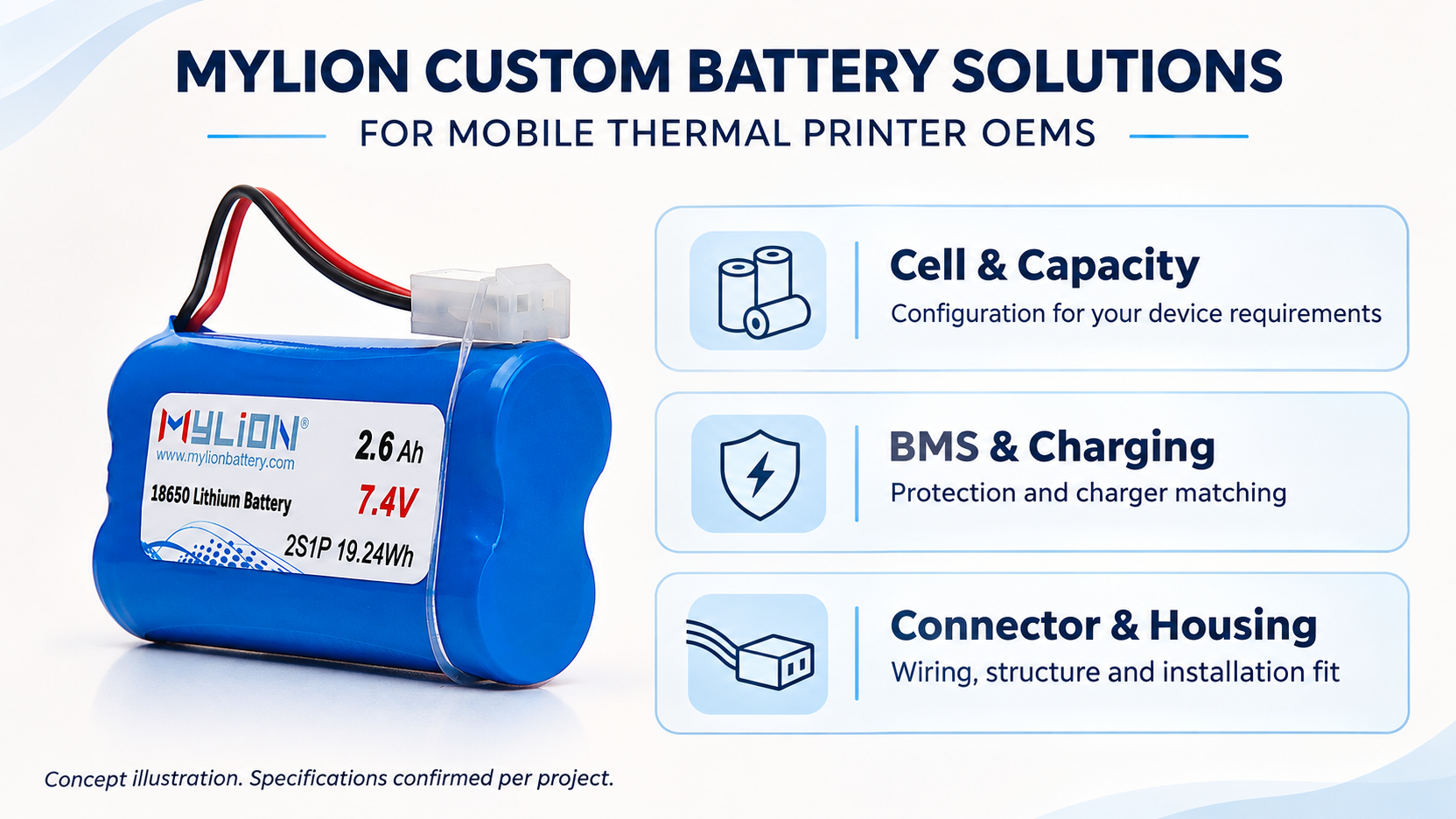 MYLION customization overview using a verified product-photo reference. Final configuration and printer compatibility are confirmed for the project.
How is the battery matched to the printing workload?
Describe the work the printer must complete between charging opportunities. Include the expected number of receipts or labels, normal periods of inactivity and the intended print settings. This gives the battery discussion a practical target that the OEM team can check in the device.
MYLION reviews current and runtime requirements when evaluating a configuration. For a printer project, provide both normal operating demand and the higher demand that occurs during printing. The proposed cells, protection and current path then need to be considered together.
Discuss the tradeoff between working time, pack size and weight before choosing a capacity. A useful sample objective is to complete the agreed printing workload with acceptable output and device behavior. Confirm the result using the intended printer, media and charging arrangement.
How can the pack fit your printer design?
A battery-space drawing helps connect the electrical proposal with the physical product. MYLION can review the pack structure, connector, cable direction and mounting approach against the available space. Include clearance for assembly and servicing, as well as the main battery dimensions.
Identify whether the battery is installed inside the printer or removed by the operator. For an internal pack, describe cable routing and service access. For a removable design, include the contact arrangement, retention method and replacement procedure. These details should be resolved in the proposed interface rather than left to final assembly.
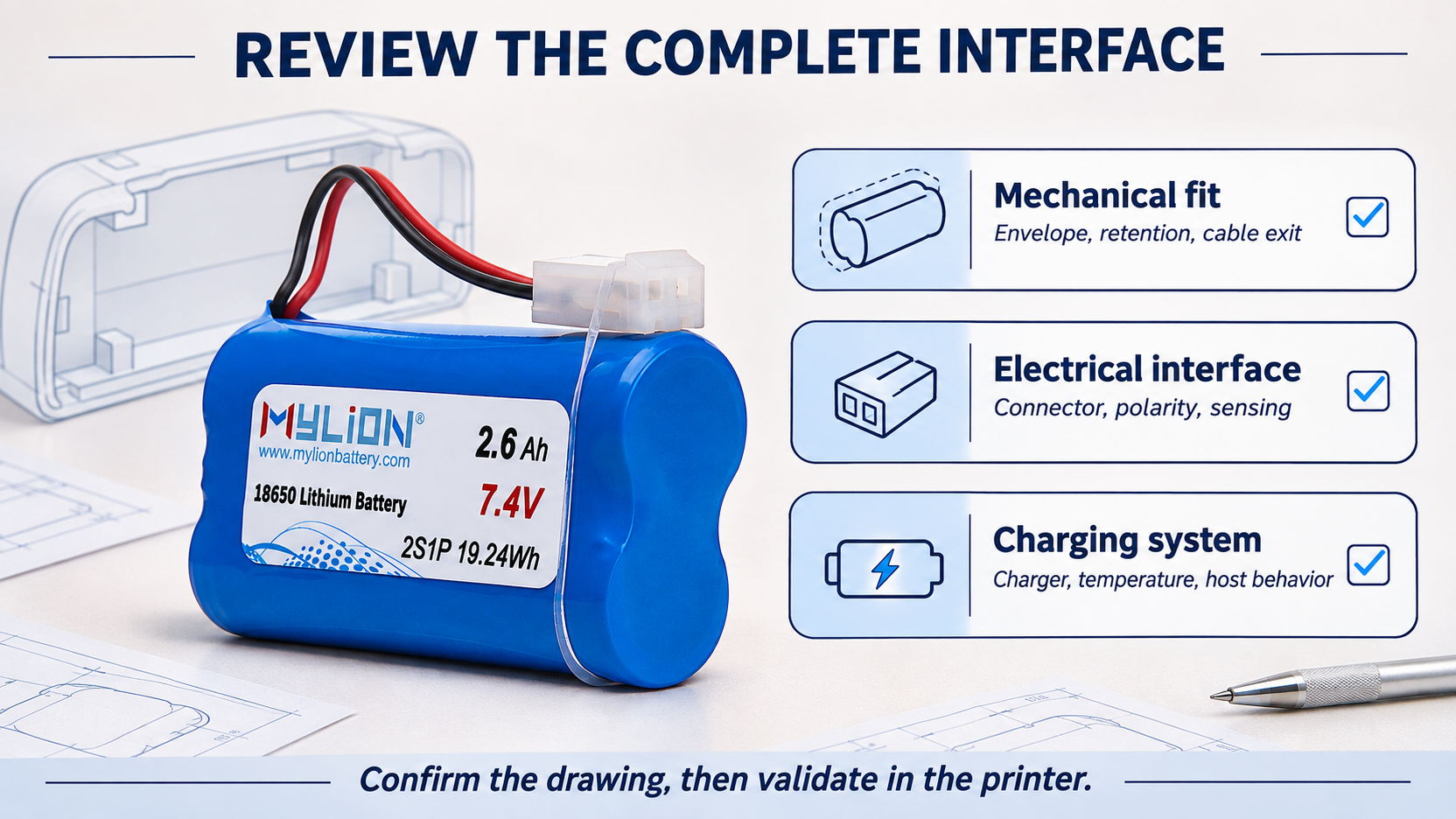 Integration concept using a verified MYLION product-photo reference. The illustrated pack is an example, not an approved replacement for a particular printer.
If an existing charger or dock will be retained, provide its specifications with the printer brief. Review charger compatibility alongside the battery interface, especially when the host requires temperature sensing, identification or other communication.
How does a MYLION OEM battery project move forward?
MYLION supports battery selection, engineering evaluation, sample testing and production follow-up. Use the following stages to organize the discussion and agree on the next deliverable:
- Share the device requirements. Explain the printer application, power needs, working time, available space, connector and charging method. Mark any inputs that are still being decided.
- Review the proposed solution. Discuss the cell configuration, protection approach and physical interface. Confirm which items need a drawing, a specification or further information from your team.
- Agree on the sample scope. Identify the proposed battery revision and the checks the sample should support. Review fit, representative printing, charging and the required working time in the intended printer.
- Confirm the production requirements. Close relevant sample feedback and agree on the specification, inspection items, documentation, labeling and packaging before a production order.
The commercial discussion should follow the same design revision as the sample review. Ask which requirements affect the quotation and what remains open. This keeps a proposal useful when the device design changes during development.
What quality and documentation support is available?
MYLION supports inspection before shipment and traceability according to project requirements. Relevant records can cover the cell batch, BMS, inspection results, labeling and shipment batch. Agree on the checks and records needed for your printer program during the project review.
Certification support and shipment documents are assessed for the selected battery design and destination market. Identify required documents early so their scope can be reviewed with the proposed configuration. Availability for another battery model does not establish coverage for a new custom pack.
For repeat orders, use the approved specification as the reference for component, interface and labeling discussions. If the printer or battery design changes, review the effect on sample approval and the relevant documents before accepting the revision.
What should you send for a printer battery quotation?
Prepare a short project brief with the information already available. A drawing, device photo or existing specification can help explain a requirement that is difficult to describe in text. Include:
- Printer application and current development stage.
- Working-voltage range, operating current and printing-current requirement.
- Target working time and expected printing workload.
- Battery-space drawing, connector details and cable direction.
- Charging method and any charger or dock that must be retained.
- Destination market, documentation needs, sample objective and estimated quantities.
If measurements or design details are still missing, identify them in the brief. Ask which inputs need to be confirmed before selecting a configuration or preparing a sample. You can also request a comparison of the available options against your size and working-time priorities.
Send your mobile thermal printer battery requirements to MYLION to request a battery proposal. Include the device drawing and charging information so the discussion can cover the complete assembly and its interfaces.
Preguntas frecuentes
Can MYLION customize a battery pack for an existing printer design?
MYLION can review an existing battery compartment, connector and electrical requirements for a custom proposal. Provide the drawing, pinout and charger information. Suitability is confirmed against the proposed configuration and testing in the printer.
Should a mobile printer use an 18650 or 21700 battery pack?
The choice depends on the available space, required working time, current demand and overall assembly. MYLION can evaluate these cell-format options against the project brief rather than selecting by format alone.
Can we keep the existing charging dock?
An existing dock can be reviewed as part of the project. Share its specifications and interface details so charging, contacts and any sensing requirements can be checked with the proposed battery.
Are all custom printer battery packs already certified?
Certification depends on the selected design, required standard and market. MYLION can support assessment of the documentation and application requirements for the project; confirm the model scope before relying on an existing report.
 Español
 English
 Deutsch
 Français
 Italiano