Battery Project FAQ for B2B Lithium Battery Solutions

Find practical answers about battery project evaluation, custom 18650 / 21700 battery packs, LiFePO4 batteries, solar power kits, golf cart batteries, BMS, certification, quality control and shipment documents.

A: Please provide application, working voltage, continuous current, peak current, target runtime or backup time, battery size limit, charging method, connector requirement, certification target, destination country and estimated quantity. Drawings, datasheets or device photos are helpful for faster evaluation.

A: Yes, but the recommendation will be more accurate if you also provide runtime, size limit, charging method, peak current, certification requirement and estimated quantity. Voltage and current alone are usually not enough for a reliable battery solution.

A: Peak current is important for motors, pumps, tools, UPS systems and devices with startup load. If peak current is not evaluated correctly, the battery may trigger BMS protection, voltage drop or unstable operation.

A: Yes. Device drawings, battery compartment photos, connector photos or existing battery specifications help us evaluate size, structure, cable direction, connector type and integration feasibility.

A: MYLION supports both standard lithium battery product lines and project-based battery solutions. For B2B projects, we evaluate the application, electrical load, mechanical size, BMS, connector, certification and production requirements before recommendation.

A: MYLION supports custom 18650, 21700 and LiFePO4 battery packs for selected OEM devices, including medical equipment, industrial IoT, garden tools, security systems and professional electronics.

A: 18650 cells are suitable for mature designs, compact structures and cost-sensitive projects. 21700 cells may be better for higher capacity, longer runtime and fewer-cell pack designs. Final selection depends on size, current, energy, cost and supply requirements.

A: Yes. MYLION can support BMS matching, connector selection, wire length, cable direction, terminals, labels, packing and selected housing customization according to project requirements.

A: For selected projects, smart BMS functions such as RS485, CANBUS, SMBus, UART or other communication requirements can be evaluated according to system integration needs.

A: Yes. MYLION can help customers apply for UL, IEC62133, CB, CE, RoHS, FCC, UKCA, UN38.3 and related compliance documentation according to project requirements. Certification scope depends on battery design, application standard and testing requirement.

A: MOQ depends on cell type, BMS, connector, housing, tooling, certification requirement and production complexity. Simple battery pack samples may be easier to arrange than fully customized projects.

A: 12V LiFePO4 batteries are suitable for selected backup power, solar lighting, security systems, CCTV, portable equipment and OEM applications.

A: In many applications, LiFePO4 batteries can be evaluated as a lead-acid replacement. Compatibility should be checked according to charging voltage, discharge current, battery size, BMS setting and system requirement.

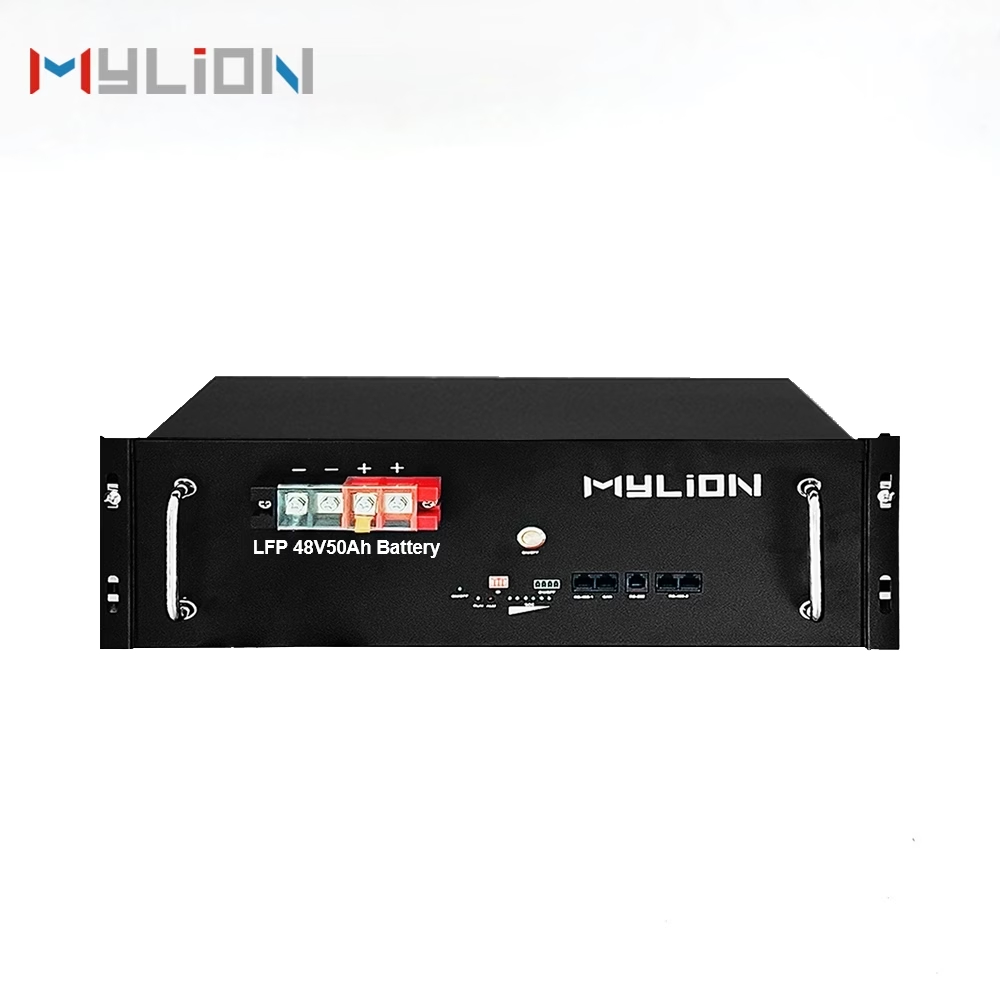
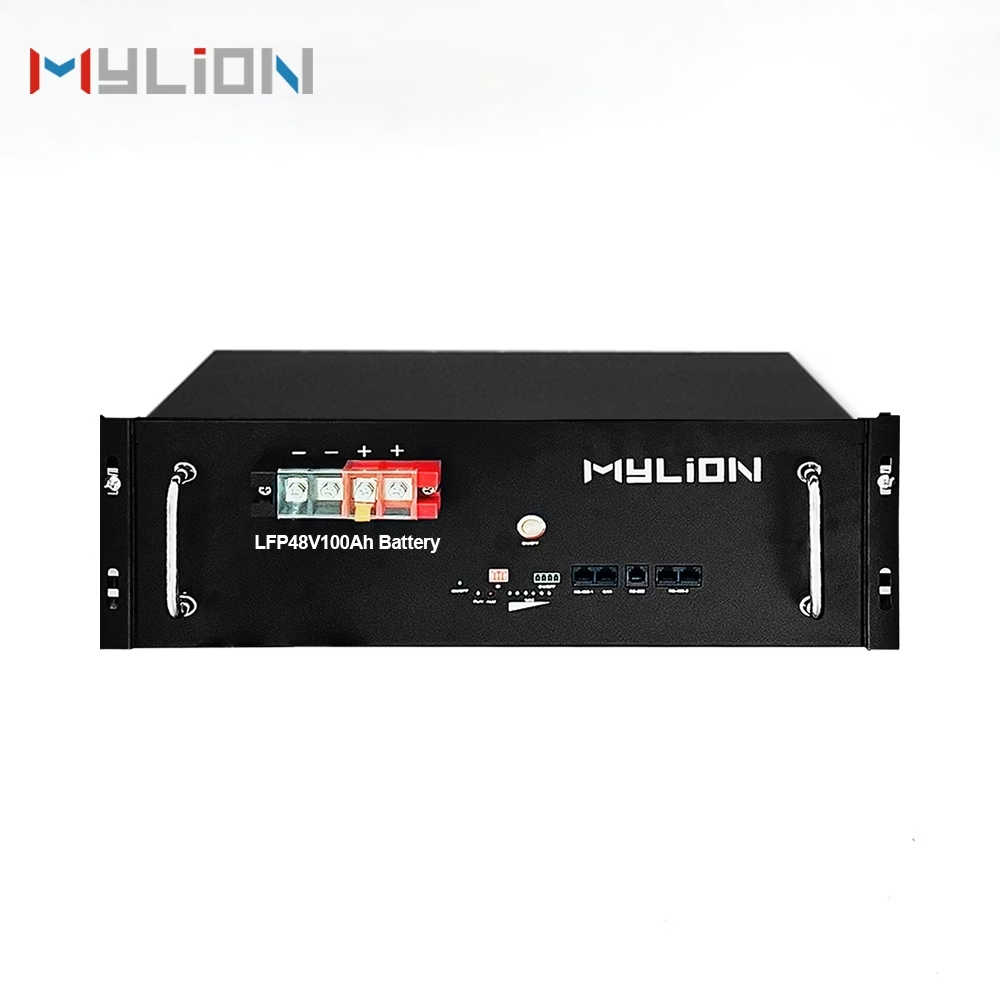
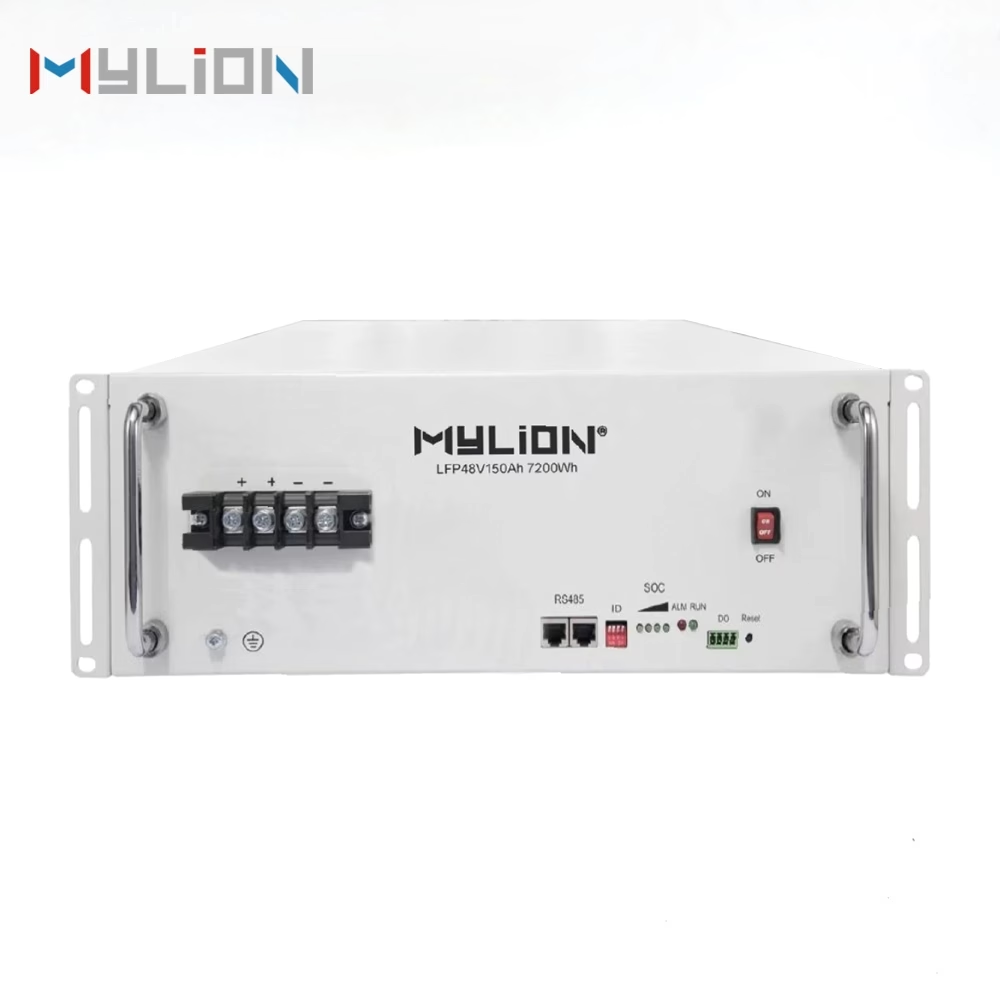
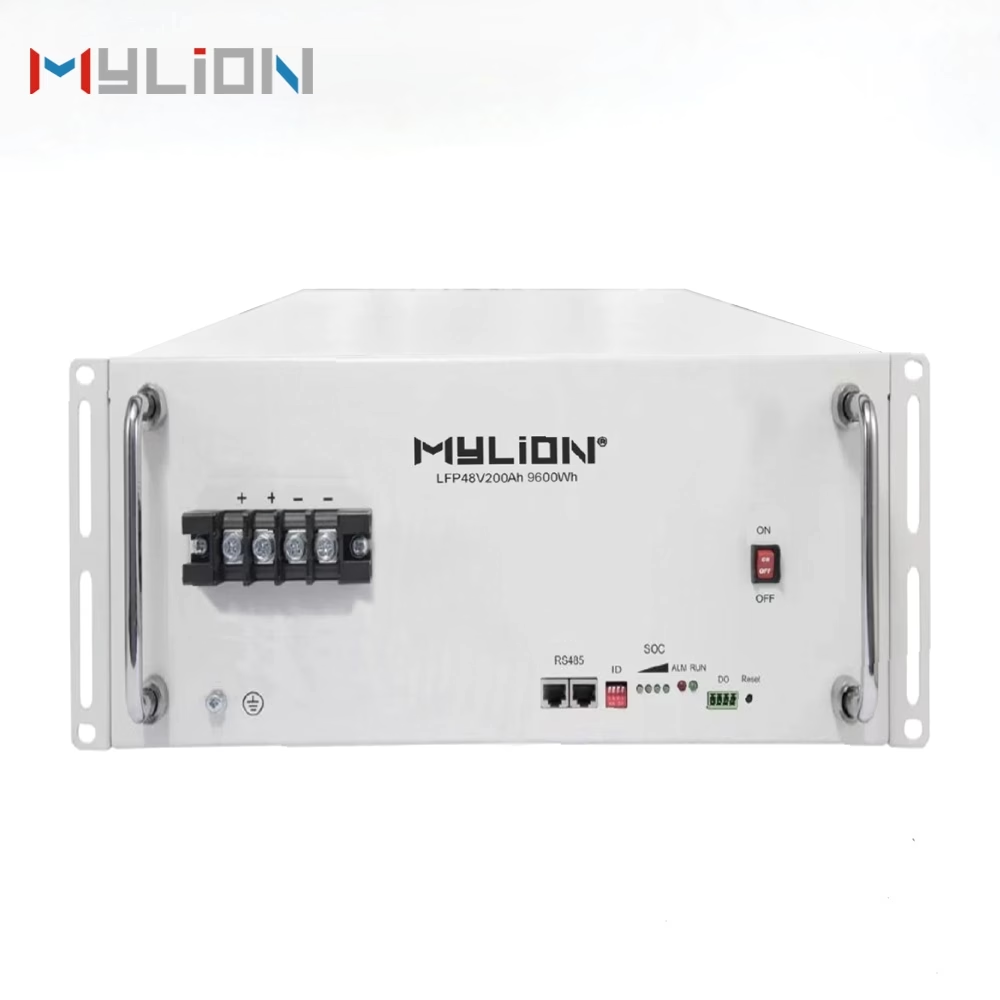
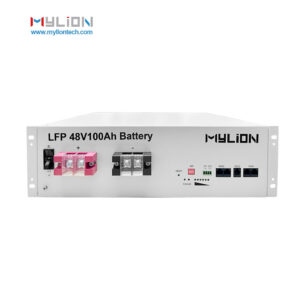
A: 51.2V usually refers to a 16-series LiFePO4 battery system, while 48V is often used as a general system voltage description. Final selection depends on the UPS, inverter, telecom power system or DC backup equipment requirement.

A: RS485, CANBUS or other smart BMS communication functions can be evaluated for selected 48V / 51.2V rack battery projects according to system integration requirements.

A: Compatibility should be evaluated case by case. Please provide UPS or inverter model, battery voltage, charging voltage, load power, communication requirement and backup runtime before recommendation.

A: A Solar Power Kit usually includes solar panel, LiFePO4 battery, charging controller, outdoor enclosure, cable and connector support for selected outdoor low-power applications.

A: Please provide load voltage, load current or power, working hours per day, required backup days, solar panel requirement, installation country, outdoor enclosure requirement and estimated quantity.

A: Backup time depends on load power, battery capacity, solar panel power, sunlight condition and required backup days. MYLION can evaluate the suitable configuration according to project requirements.

A: 51.2V LiFePO4 batteries are commonly evaluated for selected 48V golf cart lead-acid replacement projects. Final compatibility should be checked according to cart voltage, motor power, controller current, charger voltage and battery compartment size.

A: It may replace lead-acid batteries in selected 48V golf cart systems, but direct replacement should not be assumed. Charger, controller, cable, space and BMS settings should be evaluated before use.

A: Please provide cart brand/model, original system voltage, motor power, controller current, charger specification, battery compartment size, required driving range and estimated quantity.

A: Common BMS protection can include overcharge, over-discharge, over-current, short-circuit, temperature protection and cell balancing according to project design.

A: For selected projects, RS485, CANBUS or other smart communication functions can be evaluated according to system integration requirements. They should not be assumed as default features for every battery pack.

A: Yes. MYLION can help customers apply for UL, IEC62133, CB, CE, RoHS, FCC, UKCA, UN38.3 and related compliance documentation according to project requirements.

A: Certification depends on the selected battery model, design, application standard and project requirement. Some documents may be available for selected models, while new custom projects may require project-based certification application.

A: MYLION supports 100% inspection before shipment according to project requirements. Key checks may include voltage, capacity, BMS protection function, charging and discharging performance, appearance, label, packing and shipment documents.

A: MYLION can support traceability management for key project information, including cell batch, BMS, production record, inspection result, label and shipment batch according to project requirements.

A: Depending on battery model and shipment method, MYLION can support documents such as UN38.3, MSDS, datasheet, packing information and related export documents.

A: Yes, lithium batteries can be shipped internationally through suitable battery shipping channels and required documentation. Shipping feasibility depends on battery type, capacity, destination country, transport method and logistics availability.

en_USEnglish